


AI Automation
Why Mid-Market Automation Projects Succeed More Often Than Enterprise Ones
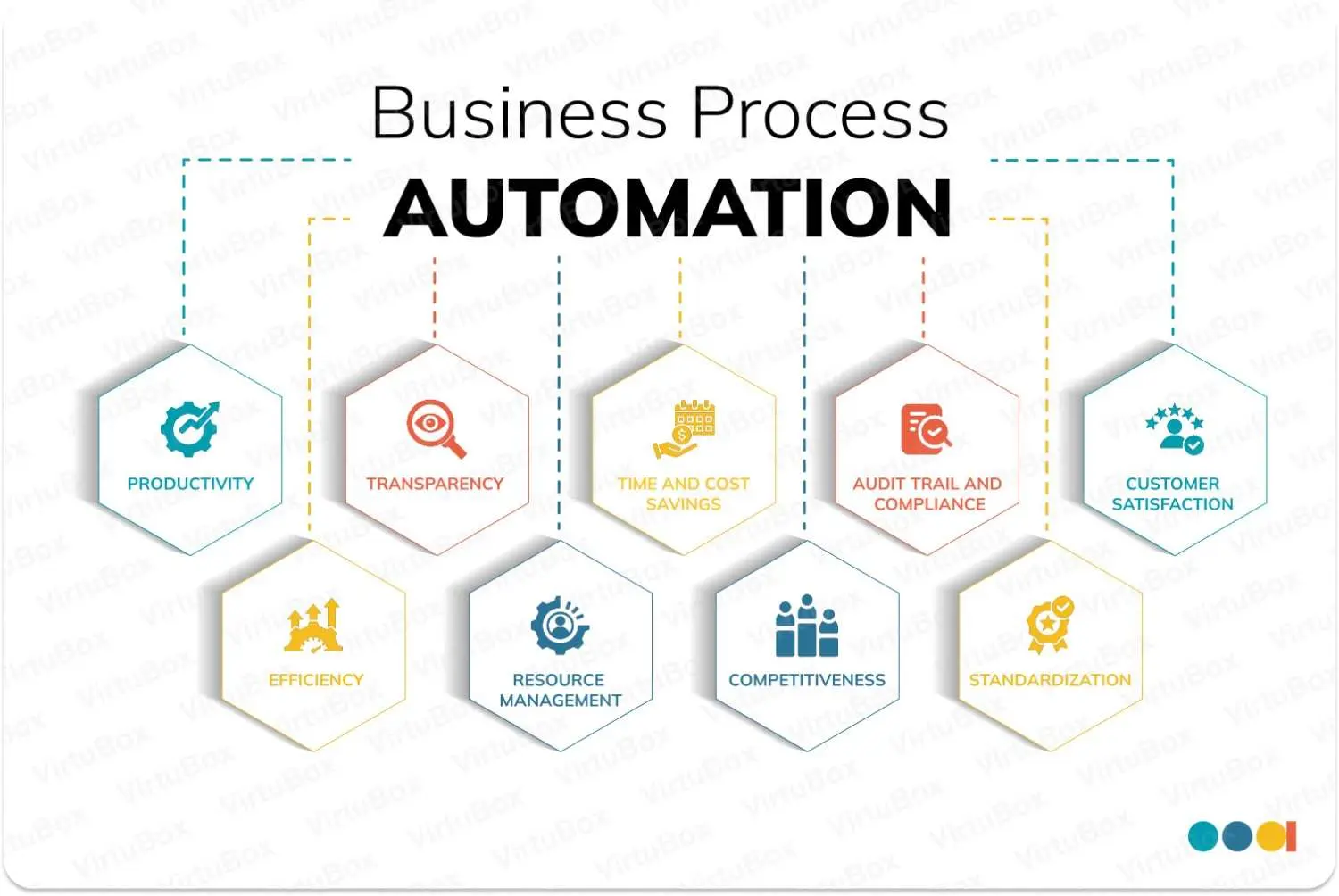
Business process automation in India typically costs between ₹5 lakh and ₹50 lakh for a custom workflow build, and delivers annual savings of ₹5 lakh to ₹20 lakh for a mid-sized company. Payback usually lands between six and nine months, with an average return of around 240 percent.
Those numbers come with an uncomfortable counterpart. RAND Corporation analysis found that 80.3 percent of automation and AI initiatives deliver no measurable business value, and MIT research found 95 percent of generative AI pilots never scale beyond the pilot stage.
Here is the part that should interest you if you run a mid-sized business: smaller organisations succeed at these projects more often than large ones. Success rates run around 65 percent for small and mid-sized businesses against 55 percent for large enterprises. You have a structural advantage, and this guide explains what it is and how to use it.
Quick answers
- Typical custom automation build in India: ₹5 lakh to ₹50 lakh
- Monthly managed automation: ₹10,000 to ₹2 lakh depending on scope
- Annual savings, mid-sized Indian company: ₹5 lakh to ₹20 lakh
- Payback period: 6 to 9 months typically, 3 to 18 months across the range
- Average ROI: around 240 percent
- Time to measurable ROI on a mid-market rollout: 4 to 6 months
- Cost reduction from core automation: 20 to 30 percent
- Cost reduction where automation prevents errors: up to 70 percent
The failure data, and what it actually says
Most articles on this topic quote the failure rate and move on. The breakdown matters far more than the headline.
RAND analysed more than 2,400 enterprise initiatives and found that only 23 percent of failures had technical roots. The remaining 77 percent traced back to strategy, governance and organisational design.
| Failure cause | Share of projects affected | What it looks like in practice |
| Weak change management | 35 percent | Staff continue using the old spreadsheet alongside the new system |
| Insufficient training | 31 percent | The tool works, nobody knows how to use the parts that matter |
| Wrong processes chosen | 28 percent | Automating something rare and complex instead of frequent and simple |
| Overly optimistic timelines | 24 percent | Scope set for four weeks, reality needs twelve |
Read that table again with your own organisation in mind. Not one of those is a technology problem. They are all problems of sequencing, communication and expectation setting.
Why this favours mid-market companies
The 65 percent versus 55 percent success gap is not an accident. Mid-sized businesses have advantages that large enterprises structurally cannot replicate:
- Shorter decision chains. One or two people can approve a process change, rather than a steering committee.
- Visible processes. A 60 person operations team can be observed directly. A 6,000 person one cannot.
- Faster feedback. When something breaks, you hear about it the same day.
- Less legacy debt. Fewer systems to integrate means fewer places for integration to fail.
- Genuine ownership. The person sponsoring the project usually also runs the affected department.
Enterprises compensate for these gaps with governance frameworks, which is exactly where the 77 percent of failures originate. Your smaller size is the advantage. The risk is copying enterprise process design instead of using it.
What automation actually costs in India
| Automation type | Typical cost | Best suited to |
| Rule-based chatbot or assistant | ₹10,000 to ₹20,000 per month | Customer queries, lead qualification, FAQs |
| Document and invoice processing | ₹50,000 to ₹2 lakh per month | Accounts payable, claims, order processing |
| Custom workflow automation | ₹5 lakh to ₹50 lakh one time | Approvals, multi-department handoffs, reporting |
| AI agent for a defined function | Varies by scope and integration depth | Support triage, internal knowledge, research tasks |
The wide range on custom builds reflects genuine variation. A single approval workflow connecting two existing systems sits near the bottom. A platform replacing four fragmented tools across finance, operations and sales sits near the top.
For scoping against your specific processes, our business process automation service page sets out how we structure these engagements, and our AI automation services cover the intelligent layer where rules alone are not enough.
What to automate first
The single strongest predictor of success is choosing the right first process. The criteria are unglamorous: high frequency, clear rules, low exception rate, and measurable current cost.
| Function | What to automate | Typical impact |
| Finance | Invoice capture, approval routing, payment reconciliation | Among the highest documented savings of any function |
| Customer support | Ticket triage, first-response, routing to the right team | Large reductions where query volume is high and repetitive |
| Sales operations | Lead capture, assignment, follow-up sequencing, CRM hygiene | Faster response times, less pipeline leakage |
| HR and admin | Onboarding checklists, leave approvals, document collection | Reclaims administrative hours across the whole team |
| Operations | Status updates, exception alerts, recurring reporting | Removes the daily reporting scramble |
| Document handling | Extraction, validation, filing, compliance checks | Highest impact where volume is heavy |
Contact centre work and document processing consistently show the most dramatic reductions, because both combine high volume with repetitive structure. If you have either, start there.
Our AI-assisted document processing case study covers a build with human-in-the-loop validation, and the AI workflow automation case study shows how approvals and reporting were streamlined for a client with fragmented internal operations.
What not to automate first
- Processes that change every quarter
- Anything with a high exception rate, where most cases need judgement
- Work performed rarely, however painful it is when it happens
- Processes nobody currently owns, because there will be nobody to validate the result
- Anything you cannot currently measure, because you will never prove the ROI
That last point is the most commonly ignored. If you cannot state how many hours a process consumes today, you cannot demonstrate it improved. Measure before you build.
A worked ROI calculation
Abstract percentages do not help with a budget decision. Here is the arithmetic on a realistic mid-market example.
The situation: a 120 person company processes roughly 400 supplier invoices monthly. Three finance staff spend about 40 percent of their time on capture, matching, approval chasing and reconciliation.
Current annual cost:
- 3 staff at 40 percent of time equals 1.2 full-time equivalents
- At ₹5 lakh average annual cost per person, that is ₹6 lakh per year in direct labour
- Add roughly ₹1.5 lakh in error correction, duplicate payments and late payment penalties
- Total current cost: approximately ₹7.5 lakh per year
The automation:
- Custom invoice processing workflow with approval routing: ₹8 lakh one time
- Ongoing hosting, support and model costs: ₹1.2 lakh per year
The outcome, assuming 70 percent of the manual effort is removed:
- Annual saving: approximately ₹5.25 lakh
- Less ongoing cost of ₹1.2 lakh, giving a net annual benefit of ₹4.05 lakh
- Payback on the ₹8 lakh build: roughly 24 months on net benefit alone
That payback looks slower than the six to nine month figure quoted earlier, and the difference is instructive. Published averages usually count gross savings and exclude ongoing costs. Run your own numbers on net benefit, including recurring costs, and treat vendor payback claims as a ceiling rather than an expectation.
The example also understates the return in one respect. Freed capacity rarely translates to reduced headcount in a growing business. It translates to the same team handling higher volume without hiring, which is usually worth more than the labour saving alone but is harder to put on a spreadsheet.
The sequencing that works
- Measure the current process. Hours consumed, error rate, cycle time. Two weeks of honest observation beats an assumption.
- Pick one process, not a programme. The first build establishes credibility. Choose something visible enough to matter and contained enough to finish.
- Map exceptions before building. Ask the people who do the work what goes wrong. The exception list determines whether rules suffice or an AI layer is needed.
- Build the smallest useful version. Automate the 80 percent of cases that follow the rule. Route the rest to a human.
- Run both systems in parallel. For one full cycle, old and new together. This is where the 35 percent change management failure gets prevented.
- Train on the exceptions, not the happy path. People work out the normal flow themselves. They need help with the edge cases.
- Measure again and publish the result internally. The second project is funded by the first project's proven number.
- Only then expand. Adjacent process, same team, before jumping departments.
Step five is the one most often skipped under time pressure, and it correlates most strongly with failure. Parallel running feels wasteful. It is the cheapest insurance available.
Rules, AI, or both
Not every automation needs AI, and treating it as a default raises both cost and failure risk.
| Approach | Use when | Cost profile | Reliability |
| Rule-based workflow | Inputs are structured and rules are stable | Lowest, predictable | Highest |
| AI-assisted with human validation | Inputs vary, judgement occasionally needed | Moderate, includes ongoing model costs | High with the human step |
| Fully autonomous AI agent | High volume, tolerable error rate, clear guardrails | Highest, ongoing | Requires monitoring |
The pragmatic default for mid-market businesses is the middle row. AI handles the variable input, a person validates anything below a confidence threshold, and the system logs everything. You get most of the benefit without the failure modes that sink fully autonomous deployments.
Our guide to what it takes to build an AI agent that works in production covers the autonomous end in detail, including the monitoring and guardrail work that pilots usually skip. For the underlying capability, see AI agent development.
Build, buy, or configure
Buy off-the-shelf when your process is genuinely standard. Payroll, basic accounting and standard CRM are solved problems, and building your own is rarely justified.
Configure a platform when your process is mostly standard with meaningful local variation. Lower cost than custom, faster than building, but you inherit the platform's constraints and its pricing changes.
Build custom when the process is a genuine differentiator, when you are connecting systems that have no ready integration, or when off-the-shelf pricing scales badly against your growth. This is also the right choice when fragmented tools are the actual problem, which our custom software development work most often addresses.
A useful test: if your competitors run this process the same way you do, buy or configure. If the way you run it is part of why customers choose you, build.
For businesses whose automation need sits inside a larger platform requirement, enterprise software development and SaaS development may be the better starting frame, and CRM development applies where sales process is the bottleneck.
Industry-specific starting points
Different sectors have different obvious first candidates:
- Healthcare: appointment workflows, records handling, claims processing. See healthcare software development.
- Real estate: lead routing, site visit scheduling, documentation. Our real estate sales automation case study covers lead visibility and conversion efficiency, and real estate software development sets out the wider platform view.
- Marketing agencies: reporting, campaign approvals, client onboarding. See marketing agency software development.
- Distributed field teams: job assignment, offline data capture, status reporting. Our field operations management case study covers mobile-first workflows with offline support.
Browse the full set of case studies or the industries we work across.
Signs you are ready, and signs you are not
Ready
- You can name the process and state roughly what it costs today
- One person owns it and will sponsor the change
- The process runs at least weekly
- Current pain is felt by more than one person
- You can spare a person for parallel running
Not ready yet
- The main driver is that a competitor announced something
- Nobody can say how long the process currently takes
- The process is due to change for other reasons within six months
- The intended sponsor is already at capacity
- Success has not been defined in a number
Being in the second list is not a reason to abandon the idea. It is a reason to spend two weeks measuring first. That fortnight is the highest-return work in the entire project.
Frequently asked questions
How much does business process automation cost in India?
Custom workflow automation typically runs ₹5 lakh to ₹50 lakh depending on complexity and integration depth. Managed monthly options range from ₹10,000 to ₹20,000 for rule-based assistants up to ₹2 lakh for enterprise document processing. Cost is driven mainly by how many systems must be integrated.
What ROI should we expect from automation?
Published averages sit around 240 percent with payback in six to nine months, and the broader range runs 30 to 200 percent over three to eighteen months. Calculate your own figure on net benefit after ongoing costs rather than gross savings, which produces a more conservative and more reliable number.
How long before we see results?
A mid-market rollout across finance, IT support or customer operations typically reaches measurable ROI in four to six months. A single contained process can show results considerably faster.
Why do so many automation projects fail?
RAND analysis of over 2,400 initiatives found only 23 percent of failures were technical. The rest came from strategy, governance and organisational design. The largest single cause is weak change management, affecting 35 percent of projects, followed by insufficient training at 31 percent.
Are smaller companies at a disadvantage?
No, and the data points the other way. Small and mid-sized businesses show around 65 percent success against 55 percent for large enterprises, largely because decision chains are shorter, processes are more visible, and ownership is clearer.
Should we automate with AI or with rules?
Use rules where inputs are structured and stable, because they are cheaper and more reliable. Add an AI layer where inputs vary or judgement is occasionally required, and keep human validation below a confidence threshold. Fully autonomous agents suit high volume work with clear guardrails and active monitoring.
Which process should we automate first?
Choose high frequency, clearly ruled, low exception work whose current cost you can measure. Invoice processing and support ticket triage are the most common strong first candidates. Avoid rare, complex or frequently changing processes regardless of how painful they feel.
Will automation mean reducing headcount?
In most growing mid-market businesses it does not. The realistic outcome is the same team absorbing higher volume without additional hiring. That is usually worth more than the direct labour saving, though it is harder to represent in a business case.
Do we need to replace our existing systems?
Often not. Many automation projects connect systems you already run rather than replacing them. Replacement becomes the better option when fragmentation across multiple tools is itself the core problem.
How do we measure success?
Define the metric before building: hours consumed, cycle time, error rate, or cost per transaction. Record the baseline, then measure the same metric after one full cycle. Projects without a pre-agreed number tend to end in disagreement about whether they worked.
Where to start
If you can name one process, state roughly what it costs you today, and identify who owns it, you have enough to have a useful conversation. If you cannot, the first step is two weeks of measurement rather than a vendor selection.
Book a free strategy call and we will work through your specific process, its current cost, and whether rules, AI, or a combination fits best. If it is not worth automating yet, we will say so, because a project that fails costs more than one never started.
You can also review how we work, browse our full services, or read common questions about our technology approach.
Rovista is an AI-first digital engineering company based in Gwalior, Madhya Pradesh, delivering business process automation, AI agents, custom software, web and mobile applications for businesses across India and internationally. 50 plus projects delivered across 30 plus clients. Read more about our team and approach or explore recent case studies.


Ready to start your project?